
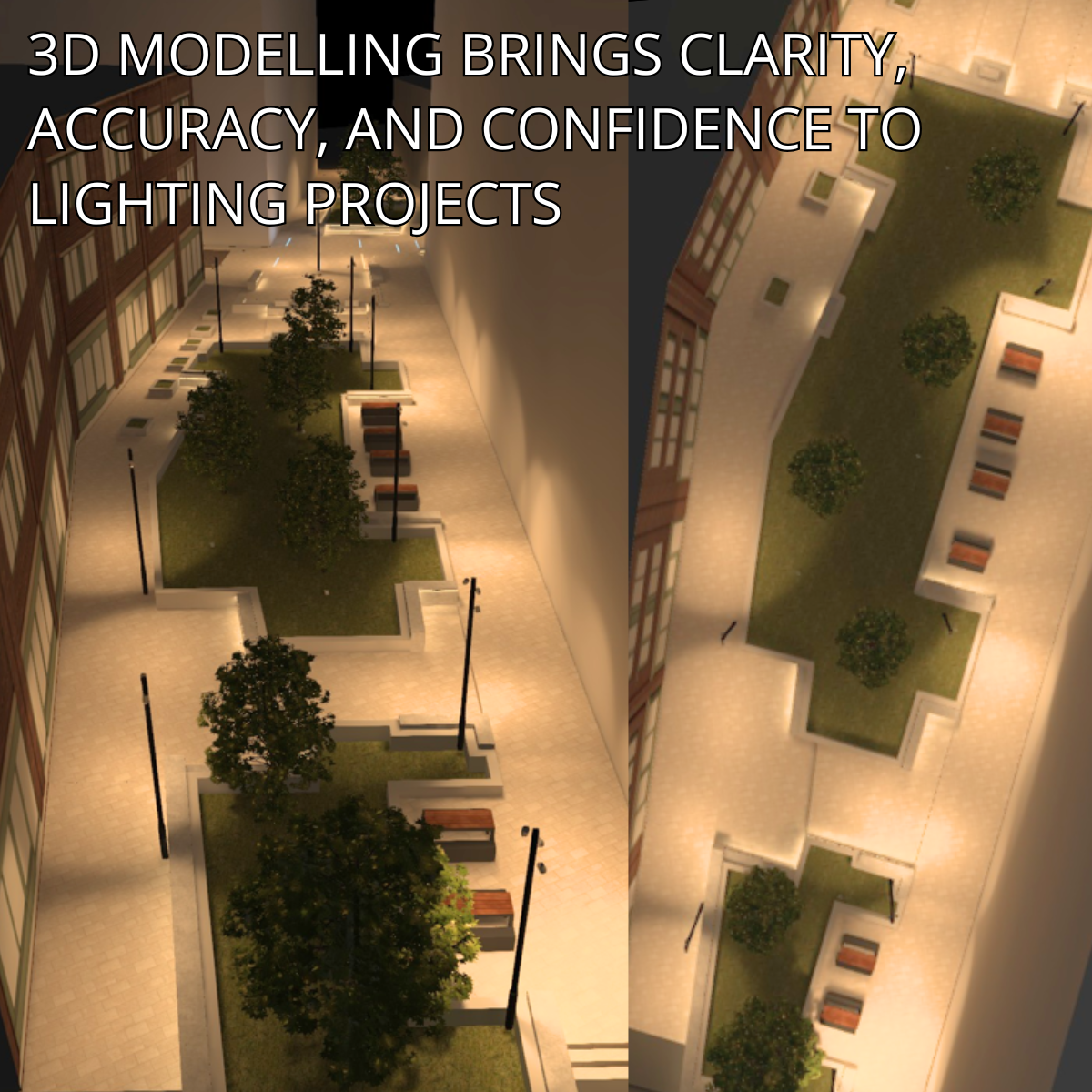
How 3D Modelling Supports Better Lighting Design
3D modelling has become an essential tool in modern lighting design and project planning. Instead of relying only on drawings or assumptions, designers can create accurate digital environments and simulate how lighting behaves in real spaces and the environment. This helps improve decision-making, reduces uncertainty, and enables a much clearer understanding of the design outcome, or mitigation measures needed for compliance.
What is 3D modelling?
3D modelling is the process of creating a three-dimensional digital version of a space, structure, or environment using software. These models can be viewed from multiple angles and used to test layouts and design ideas before anything is installed. In lighting projects, this is especially useful because it allows designers to visualise not just where luminaires are positioned, but how they will perform.
Why 3D modelling matters in lighting projects
One of the most important considerations is light spill, which is unwanted light spreading into areas where it isn’t needed (such as neighbouring properties, roads, or surrounding land). Light spill can affect sensitive ecology, disturb residents, and lead to environmental compliance concerns.
By using 3D modelling early in a project, lighting performance can be explored and refined before installation, helping to prevent issues later and ensuring the design meets both customer expectations and planning requirements.
How DFL uses 3D modelling for projects
At DFL, 3D modelling is used as a practical way to help understand lighting outcomes (particularly light spill and overall light distribution). By building detailed site models, we can demonstrate how light spreads across an area and where light spill may occur, allowing adjustments to be made at the design stage and mitigation measures to be incorporated early in the process.
We can then include these 3D models as evidence in our Lighting Impact Assessments and Technical Reports, which are submitted as part of the planning process. The visual results help provide clear evidence for planning documentation, supporting planning committee decisions and assisting planning officers when reviewing proposals and making decisions.
3D modelling brings a clear visualisation
3D modelling brings clarity and confidence to lighting projects. By using 3D visualisation to show light performance, highlight potential spill, and strengthen planning submissions, DFL helps clients and design teams achieve effective, well-controlled lighting designs that meet both practical needs and environmental criterion.
So…
If you’re planning a lighting scheme and want confidence from the very start, DFL’s 3D modelling service can give you the clarity you need. Whether your priority is reducing light spill, protecting sensitive surroundings, or supporting a smoother planning process, our visual simulations help you understand the impact early and refine the design before installation. Get in touch with DFL to discuss your project and see how 3D modelling can strengthen your lighting design and support successful planning outcomes.