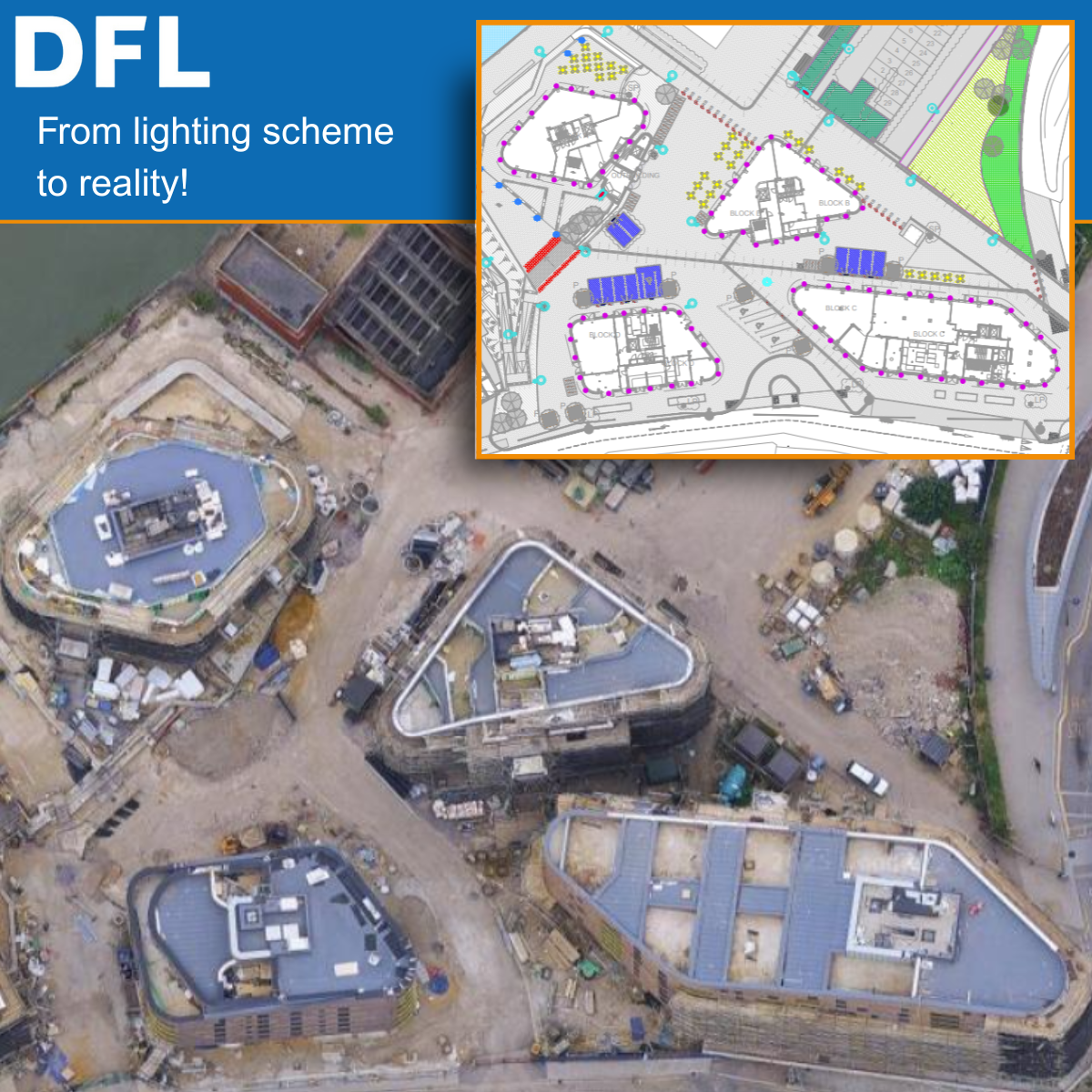
The completed Chatham Waterfront plaza is now a vibrant focal point within Medway’s evolving urban landscape. DFL’s lighting and electrical design has helped to transform the area into a safe, engaging, and energy-efficient public space that performs seamlessly within the broader urban planning framework.
The lighting design enhances safety and visibility, encourages evening activity, and celebrates the site’s connection to the river and historic surroundings. The electrical systems provide a resilient foundation for long-term operation and future adaptability.
By integrating technical precision, sustainability, and architectural sensitivity, DFL has delivered a solution that supports both community use and Medway’s long-term regeneration ambitions.
Frequently Asked Questions about Architectural Lighting Design and Urban Planning
1. How does architectural lighting design contribute to urban planning?
Architectural lighting design plays a crucial role in urban planning by shaping how people experience public spaces after dark. It improves safety, enhances visual appeal, and defines identity within the built environment, helping planners create lively, inclusive, and sustainable cities.
2. Why are adoptable lighting standards vital in urban development?
Adoptable standards ensure that once a scheme is completed, the local authority can safely maintain the lighting infrastructure. They guarantee consistent quality, energy efficiency, and reliability—key components of well-planned, long-term urban development.
3. How does DFL balance heritage conservation with modern lighting design?
DFL approaches every project with sensitivity to context. By using discreet, efficient luminaires and carefully controlled lighting levels, we ensure that contemporary lighting enhances rather than overpowers the character of nearby conservation areas and historic streetscapes.