
Urban regeneration projects require far more than exceptional architecture. To create a successful destination, developers must ensure that public spaces remain safe, attractive, accessible, and environmentally responsible long after sunset.
Time to challenge DFL!
The Issue
In June 2025, Hartwell Plc submitted plans to Birmingham City Council for the redevelopment of Phoenix Yard, a 2.8-acre brownfield site in the heart of Digbeth. The ambitious £100 million mixed-use scheme sought to transform the former Phoenix Ironworks site into a thriving destination comprising media and educational facilities, commercial space, retail units, public realm enhancements, and 240 residential apartments.
Designed by the award-winning architectural practice Allford Hall Monaghan Morris (AHMM), the development aimed to honour Digbeth's industrial heritage while embracing modern sustainability standards and creating a dynamic gateway into one of Birmingham's fastest-growing creative districts.
A key challenge was developing an architectural lighting strategy that would complement the site's heritage character while supporting modern placemaking objectives. The lighting needed to enhance safety and wayfinding, highlight architectural features, encourage evening activity, and support biodiversity goals, all while aligning with the project's ambitious sustainability targets.
The lighting design would therefore play a crucial role in determining how people experience the development both during the day and after dark.
The Solution
DFL was appointed to develop a comprehensive architectural lighting design that would elevate the visitor experience while supporting the wider regeneration vision for Phoenix Yard.
Our approach focused on creating a layered and carefully balanced lighting scheme that enhances the site's identity without overwhelming its historic character.
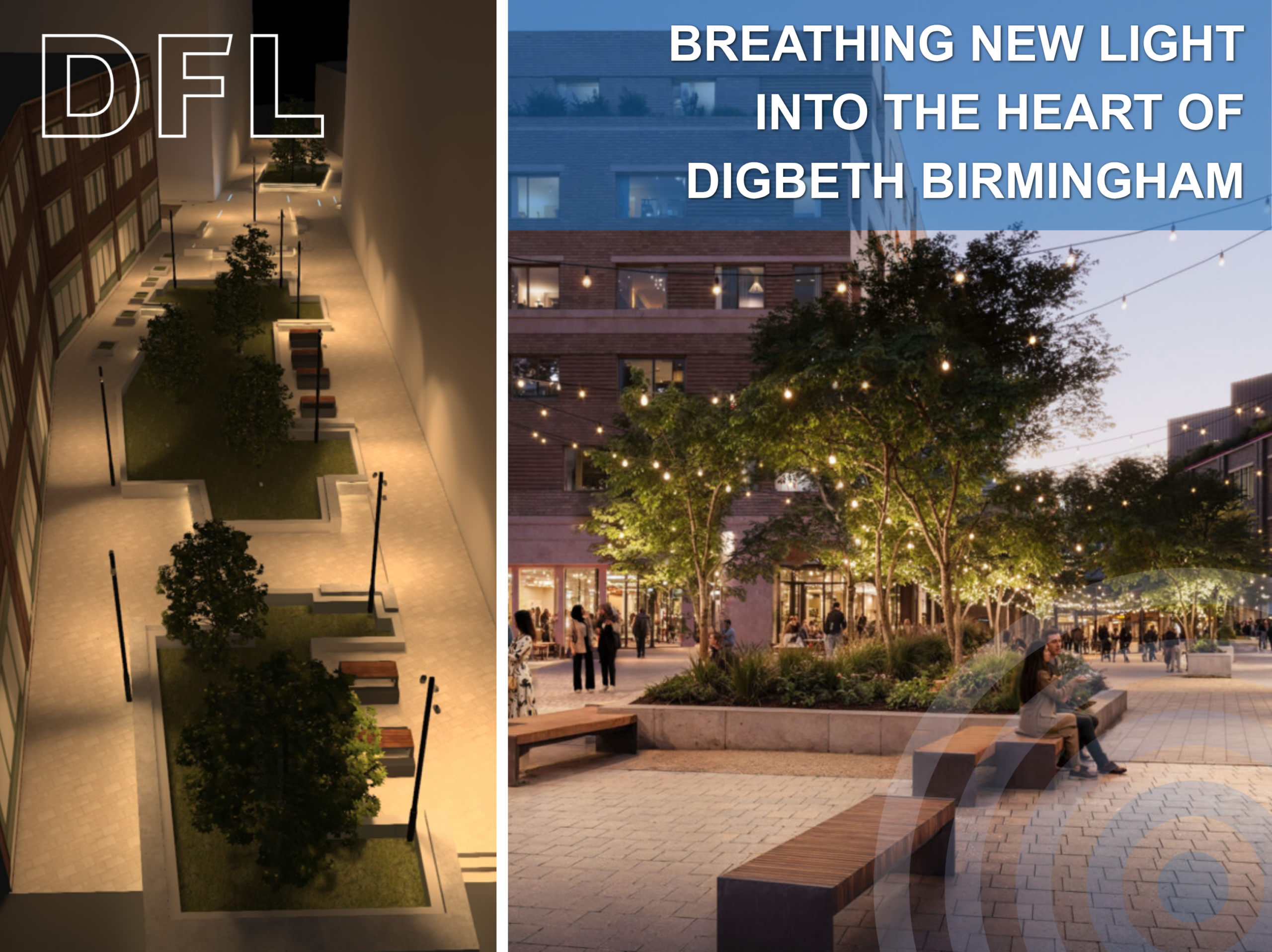
The public realm was a key consideration. We introduced discreet floor recessed lighting throughout pedestrian routes and key gathering spaces to improve navigation and create a welcoming environment. These fittings provide subtle illumination while maintaining a clean visual appearance during daylight hours.
To strengthen the connection between architecture and landscape, our design incorporated feature tree uplighting throughout the development. Carefully positioned luminaires accentuate the landscaping strategy and add depth, texture, and visual interest to the public realm after dark. The lighting highlights seasonal planting while creating attractive focal points across the site.
Bench lighting was integrated into seating areas to improve usability and comfort during evening hours. By incorporating lighting directly into public furniture, you can enhance safety while maintaining a sophisticated and uncluttered aesthetic.
Recognising Phoenix Yard's role as a future community destination, we also included provisions for temporary festoon lighting installations. These flexible lighting arrangements will support markets, cultural events, community gatherings, and seasonal celebrations, helping the public realm adapt to a variety of uses throughout the year.
A further element of the scheme focused on accentuating key architectural features of the buildings themselves. Carefully selected luminaires highlight material textures, façade details, and significant architectural elements, reinforcing the industrial heritage of the site while showcasing the contemporary design language introduced by AHMM.
Throughout the project, sustainability remained a primary consideration. Energy-efficient lighting technologies were specified to minimise energy consumption and reduce operational costs. The design also considered environmental impacts through responsible light distribution, helping to minimise unnecessary spill light and support the development's biodiversity objectives.
By combining architectural lighting, landscape lighting, public realm illumination, and event lighting capabilities into a cohesive strategy, DFL created a lighting scheme that contributes significantly to the overall identity and functionality of Phoenix Yard.
The Result
In November 2025, Phoenix Yard successfully secured planning approval, marking a significant milestone in the ongoing transformation of Digbeth.
DFL's architectural lighting design demonstrates how thoughtful illumination can support regeneration, sustainability, and placemaking objectives simultaneously.
Once completed, Phoenix Yard is expected to generate approximately 200 construction jobs and support more than 500 full-time equivalent roles, contributing significantly to the social and economic growth of Digbeth. Positioned alongside major projects such as the BBC's new headquarters at Typhoo Wharf and the £1.9 billion Smithfield Market masterplan, the development will become a key destination within Birmingham's evolving creative and cultural landscape.
For DFL, Phoenix Yard demonstrates how architectural lighting can become a powerful tool in urban regeneration - enhancing identity, supporting sustainability, improving public safety, and helping create places where people genuinely want to spend time.
Can architectural lighting contribute to sustainability targets?
Yes, it can. Modern architectural lighting uses highly efficient LED technology, intelligent controls, and carefully directed illumination to reduce energy consumption, minimise light pollution, and support environmental certification requirements such as BREEAM and WELL standards.
Do you have a similar project that you need lighting assistance on?
Let DFL take the stress out of your project.
Click the button and fill in a short form ... we can have a Quote back in your hands in no time!
Want to chat about your project? We’re all ears.