When planning a new development, artificial lighting is often viewed as one of the final design considerations. In reality, external lighting can have a significant impact on surrounding communities, wildlife and the night-time environment. Increasingly, local planning authorities are requiring developers to demonstrate that proposed lighting has been carefully designed before planning permission is granted.
This is where a Lighting Impact Assessment and an Ecological Lighting Assessment become essential.
But what is the difference between the two?
Lighting Impact Assessment
A Lighting Impact Assessment is the broader document. It considers questions such as:
- Will light spill onto neighbouring properties?
- Will drivers or pedestrians experience glare?
- Is there excessive sky glow?
- Does the design comply with ILP Guidance Notes for the Reduction of Obtrusive Light?
- Are lighting levels appropriate for the intended use?
- Can lighting be better controlled through optics or dimming?
Its primary aim is to show that the lighting is suitable for the development and complies with planning policy and relevant guidance.
Ecological Lighting Assessment
An Ecological Lighting Assessment is more specialised. It asks questions like:
- Will lighting affect bat commuting routes?
- Could it disturb nesting birds or foraging areas?
- Will hedgerows or woodland edges become illuminated?
- Does the proposed lighting maintain dark ecological corridors?
- Can the lighting be redesigned to reduce impacts on biodiversity?
It is often informed by ecological surveys and should be developed alongside an ecologist where protected species are present or likely to be affected.
How they work together
In practice, many developments need both.
For example, a new housing development near a woodland might require:
- A Lighting Impact Assessment to demonstrate compliance with planning policy, minimise light spill, glare and sky glow, and protect neighbouring properties.
- An Ecological Lighting Assessment to show that bats, dormice or other protected species will not be adversely affected by the proposed lighting.
At DFL, these are often delivered as complementary parts of a single, coordinated lighting strategy. This ensures the scheme satisfies planning requirements while also addressing ecological concerns, helping to reduce the risk of delays, objections or redesigns.
In simple terms:
- Lighting Impact Assessment = “Is this lighting appropriate for the development and its surroundings?”
- Ecological Lighting Assessment = “Is this lighting appropriate for wildlife and biodiversity?”
Why would an Ecological Lighting Assessment be required?
Many planning applications now require evidence that lighting has been designed responsibly, particularly where developments are close to:
- Ancient woodland
- Watercourses
- Nature reserves
- Protected species habitats
- Rural locations
- Dark Sky areas
- Green infrastructure corridors
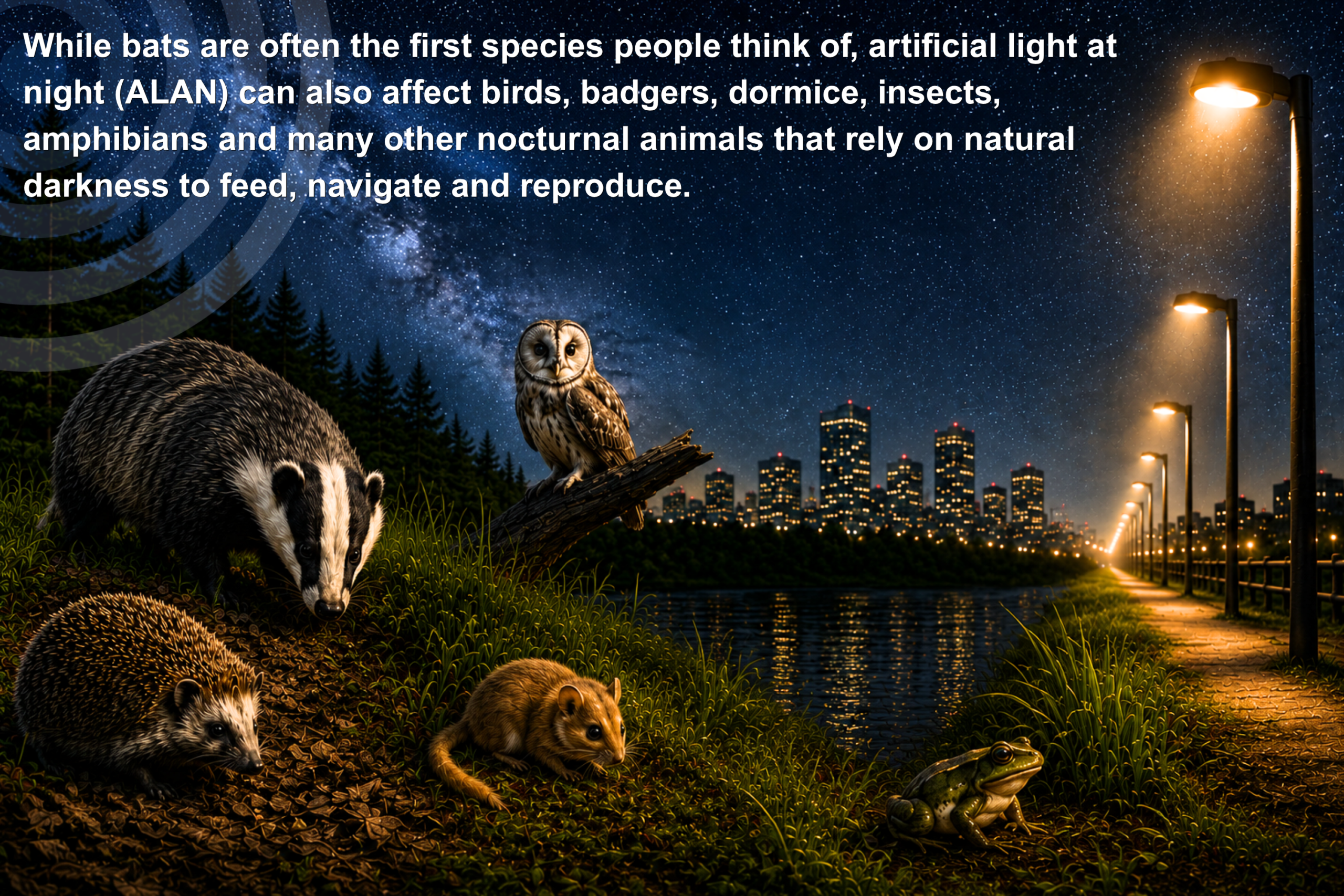
While bats are often the first species people think of, artificial light at night (ALAN) can also affect birds, badgers, dormice, insects, amphibians and many other nocturnal animals that rely on natural darkness to feed, navigate and reproduce.
Rather than simply measuring light levels, the assessment considers where light falls, how long it operates, its colour temperature and whether it could disrupt important ecological corridors.
Without a suitable lighting strategy, planning authorities may request additional information, impose planning conditions or delay planning approval until satisfactory evidence has been provided.
By addressing lighting early in the design process, developers can often avoid expensive redesigns later.
What should a planning lighting strategy include?
A well-prepared lighting strategy does far more than specify light fittings. It demonstrates that lighting has been carefully considered alongside planning policy, environmental requirements and operational needs.
A typical planning lighting strategy should include:
- A detailed Lighting Impact Assessment
- Existing and proposed lighting layouts
- Lux contour drawings
- Vertical illuminance calculations
- Light spill assessments
- Obtrusive light analysis in accordance with ILP guidance
- Ecological lighting recommendations
- Luminaire specifications
- Lighting control proposals, including dimming and switching regimes
- Justification for lighting levels and mounting heights
Together, these documents provide planning officers with confidence that the proposed scheme balances safety, functionality and environmental protection.
Why choose specialists?
Lighting assessments combine planning policy, environmental legislation and technical lighting design. Working with experienced lighting consultants ensures reports are accurate, compliant and tailored to the specific requirements of your project.
Whether you’re delivering a residential development, commercial site, highway scheme or public realm project, an experienced consultant can coordinate with planners, architects, ecologists and local authorities to produce a lighting strategy that supports successful planning outcomes.
At DFL, we prepare planning-ready Lighting Impact Assessments and ecological lighting strategies that help projects progress smoothly while protecting wildlife, reducing light pollution and supporting sustainable development.
Three questions to ask before submitting your planning application
Before you finalise your planning submission, ask yourself:
- Could your proposed lighting affect nearby wildlife habitats or protected species?
- Does your Lighting Impact Assessment clearly demonstrate compliance with current planning and dark sky guidance?
- Has your lighting strategy been designed to satisfy both planning officers and environmental consultees from the outset?
If the answer to any of these questions is “no” or “I’m not sure”, – Give DFL a call.